
What is Wellness? (Part 2)
In Part 1 of our wellness conversation last year, we looked at a broad overview of what wellness could mean for people (the improvements of our physical, mental, emotional, environmental etc.). In this post we want to look specifically at the environmental aspects of wellness – in particular what changes you can make to your own home to improve your wellbeing.
To put it bluntly, the housing stock in the United Kingdom is some of the worst performing in Europe. In general, our homes are dark, old, poorly insulated, poorly ventilated, and poorly maintained (and there’s not enough of them). This is not necessarily the fault of the occupant but rather a result of trying to live a modern, 21st century lifestyle in houses built over a century ago (around 38% of all UK housing was built before 1946). Our last journal entry (‘Questions of Comfort’) explained some of the issues that arise from living a modern life in old houses and, despite the overall condition of the UK’s houses, there are easy, practical things that people can do to improve their internal environments.
So why bother?
In the same way that doing exercise improves your mental health as well as your physical health, your home can be so much more than a place of shelter and safety. Most people in the Global North spend around 90% of their time indoors and the rapid rate of technological change in the last 200 years has seen our bodies and brains (which are still, evolutionary speaking, living in caves or on the African savannah) struggling to catch up. Seasonal Affected Disorder (SAD), sick building syndrome, and diseases resulting from Vitamin D deficiency are all massively influenced by our built environment in addition to more general symptoms of anxiety and depression.
What do I do to get started?
Nothing. The first and probably most important thing to do is try and disconnect from the hustle and bustle of everyday life and focus on how the places in your home make you feel. Spend a bit of time in each room or spot in your house at different parts of the day and take notes about what you observe, feel and think. You may notice that a particular room or place feels better in the morning rather than the evening or that certain places feel more comfortable than others. You might find certain places enliven you and give you more energy and it’s important to map out where all of these happen as it will allow you to target any changes more effectively.
The next thing to do is make a diary of your daily habits – probably over the course of two weeks (or at least two working weeks with a weekend in between) – to see how you currently use the places in your home. The most important thing in the diary process is to keep doing what you normally do; don’t suddenly develop a morning yoga habit if that’s not what you normally do (even though it’s a habit you aspire to having). The value of this process is that it allows you to identify the crossovers between your thoughts and feelings about your home and your daily habits. Analysing the two together will hopefully provide you with a list of things which can be grouped into the following categories:
· Cyclical habits you want to change
· Cyclical habits you want to introduce
· Cyclical habits you want to enhance
· Places in your home you don’t like at any time
· Places in your home that you like all the time
· Places in your home that have a specific feeling /function some of the time
Your list should throw up things which are related and, probably, the list will also identify aspects of your life which are not impacted by your environment but are still really important to you. Once you have this list you can begin to pick out individual items and work to resolve them. Some of the items might be easy to remedy with simple, deliberate changes to your routines, and some (such as introducing ‘blue blocking’ lightbulbs for evening areas) may be relatively inexpensive, but others may take more major interventions. Focussing the smaller changes can create a snowball effect whereby the small changes you make compound to have a much greater effect on how you feel.
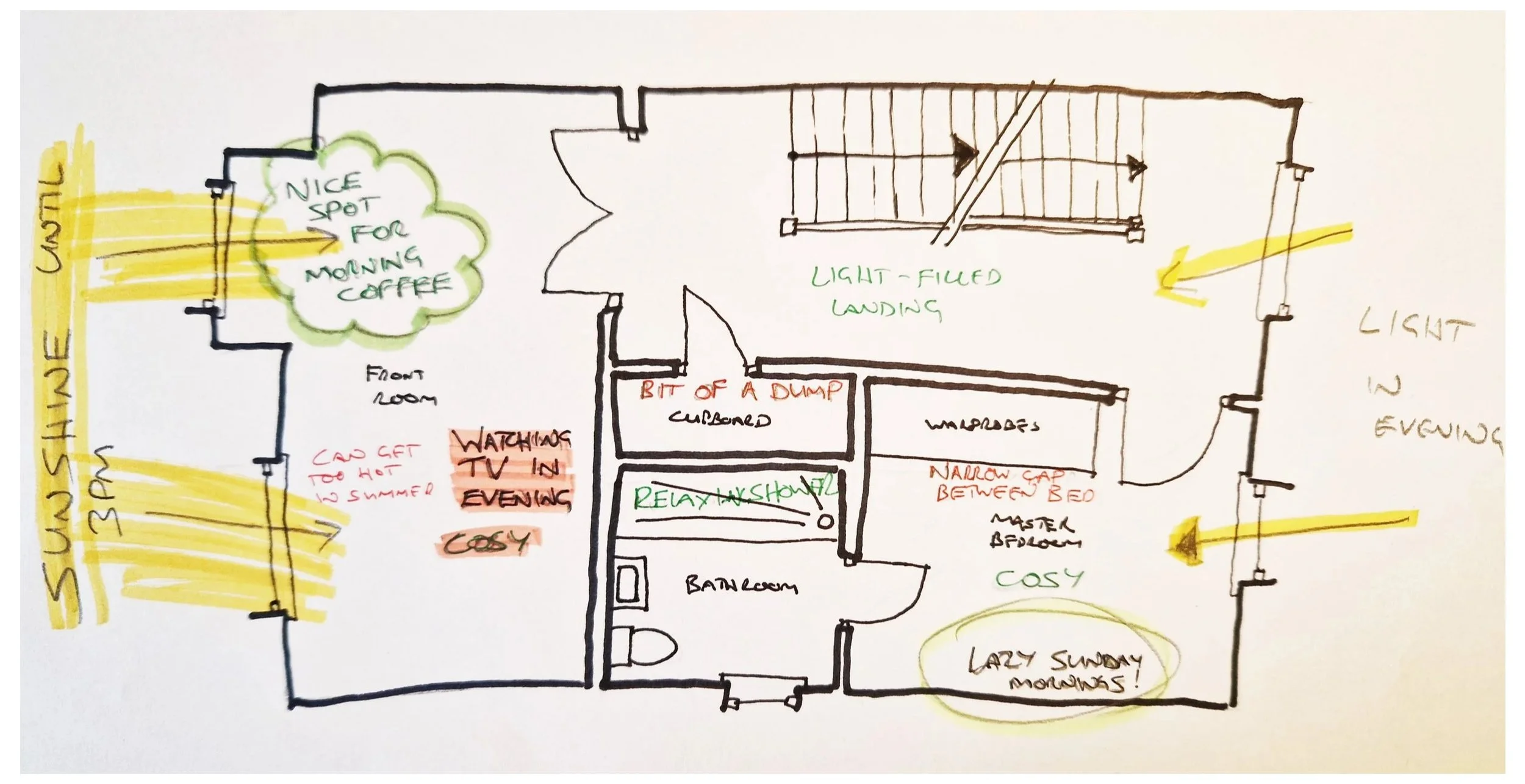
A simple sketch plan like this can quickly help you to identify the important areas within your house.
It might be that your list uncovers the need for more fundamental changes to your home or you may reach the stage where all the ‘simple’ changes have been made; this is where more professional services can come in. At OHA we take a broad approach to design and our services scale from bespoke items of furniture all the up to entire houses. We can take the list you produce from the process above and see where design solutions can be used to solve specific issues. We will work with you every step of the way to ensure that your needs are being met and have regular project updates and feedback sessions to monitor progress.
Next Steps
If all of this sounds overwhelming or you’re still unsure where to start, Open House Architecture will be producing a ‘Healthy Home’ checklist which is full of useful tips and information to get you started. This will be available to download from our website in the coming months (we’re putting the final touches to it as I write this) so please visit our website and check our socials for updates.